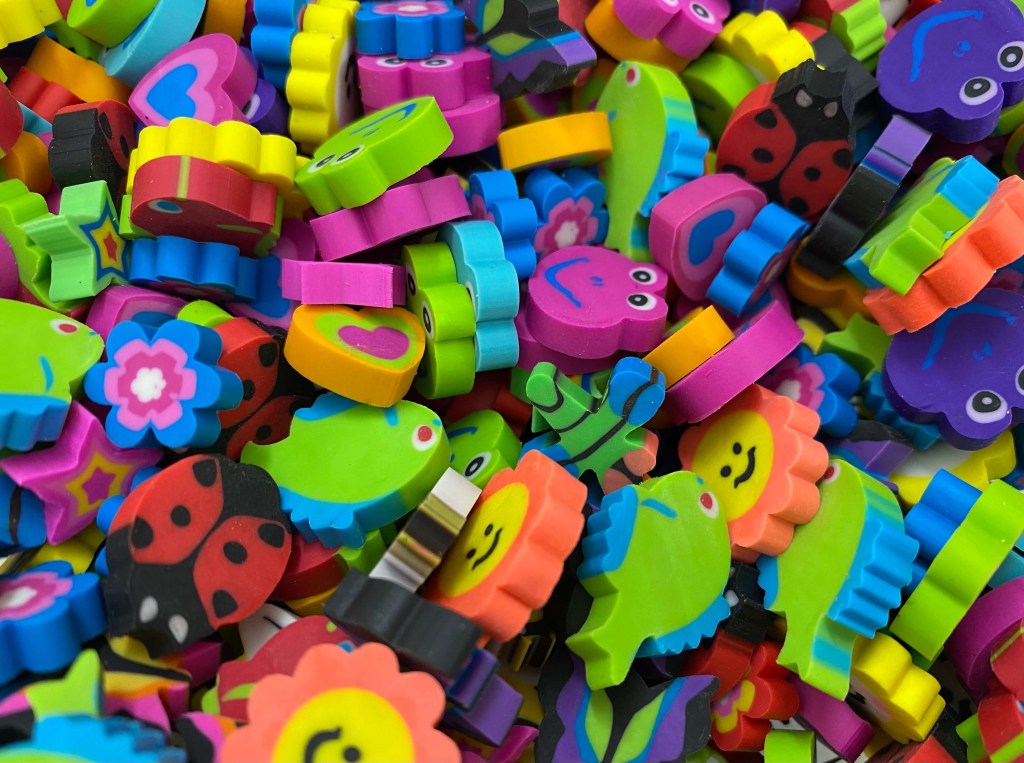
Mini erasers are more than cute classroom supplies. They are affordable, engaging, and versatile learning tools that make lessons exciting for kids. Teachers, homeschool parents, and tutors love using mini erasers for math centers, literacy games, sensory bins, STEM challenges, and fine motor activities.
Whether you are planning preschool learning activities, kindergarten centers, or elementary classroom games, these mini eraser ideas are simple to set up and easy to adapt for different ages and skill levels.
If you are looking for themed mini erasers for your classroom or homeschool activities, check out Mini Erasers Co. for fun educational mini erasers and learning manipulatives.
Why Use Mini Erasers for Learning?
Mini erasers are one of the best hands-on learning tools because they help children practice important academic and developmental skills while keeping activities playful and engaging.
Mini eraser activities can support:
- Counting and number recognition
- Fine motor development
- Sorting and classifying
- Literacy and phonics
- STEM learning
- Sensory play
- Problem-solving skills
- Independent learning centers
Teachers also love that mini erasers are inexpensive, reusable, and easy to organize for seasonal themes and classroom centers. Ready to put those mini erasers to use? Here are 50 educational activities children will love.
50 Mini Erasers Learning Activities
1. Count and Match Numbers
Skills/Subject: Counting, number recognition
Grade Level: Preschool–Kindergarten
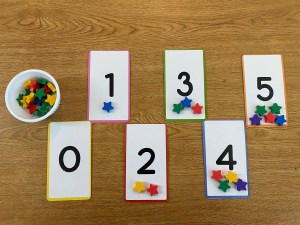
Write numbers on index cards or sticky notes. Have children count the correct number of mini erasers and place them on each card. This activity helps build one-to-one correspondence and early math confidence.
2. Uppercase and Lowercase Match
Skills/Subject: Letter recognition
Grade Level: Preschool–Kindergarten
Match uppercase letters with lowercase letters using mini erasers as markers.
3. Build CVC Words
Skills/Subject: Phonics and spelling
Grade Level: Kindergarten
Use mini erasers to mark letters while students sound out simple consonant-vowel-consonant words.
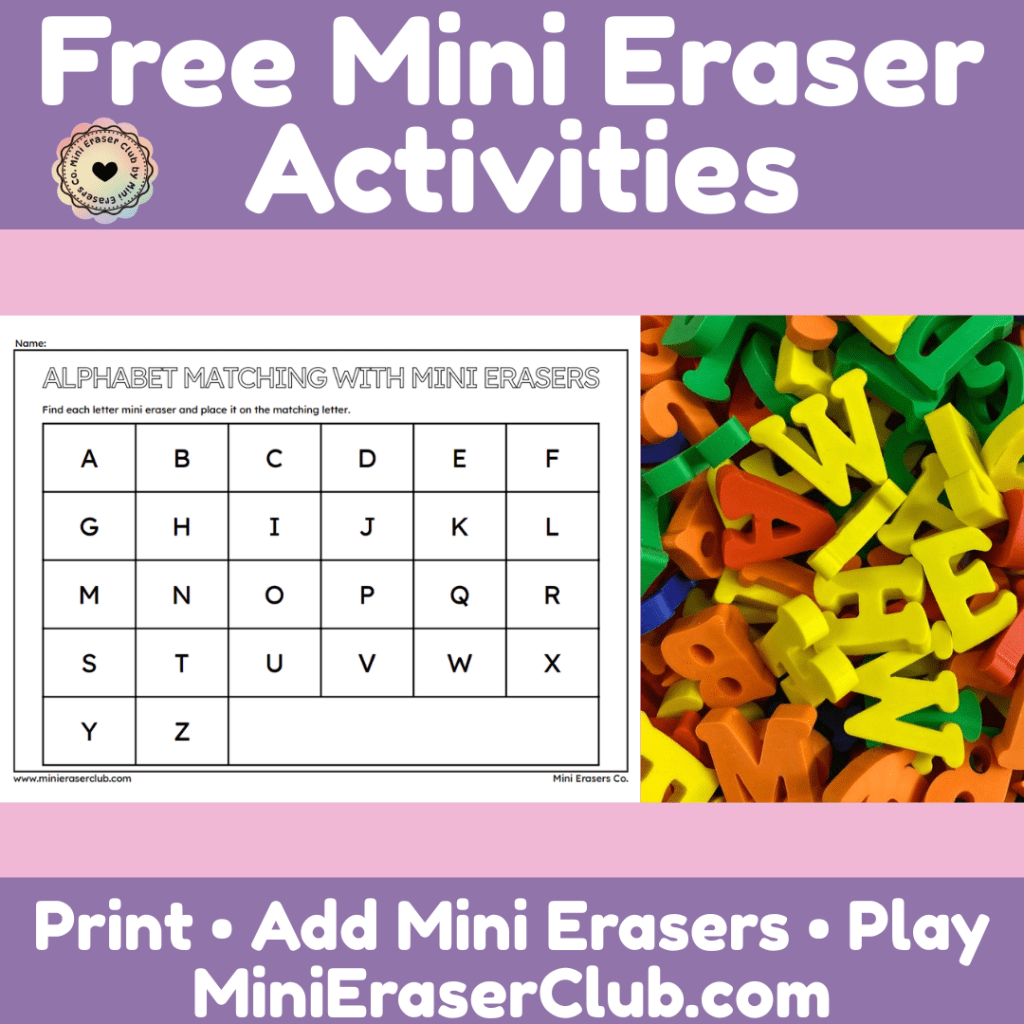
4. Alphabet Matching Game
Skills/Subject: Letter recognition, literacy
Grade Level: Pre-K–Kindergarten
Write letters on paper or use alphabet cards. Students place a matching mini eraser on each letter. This works especially well with themed erasers that match letter sounds.
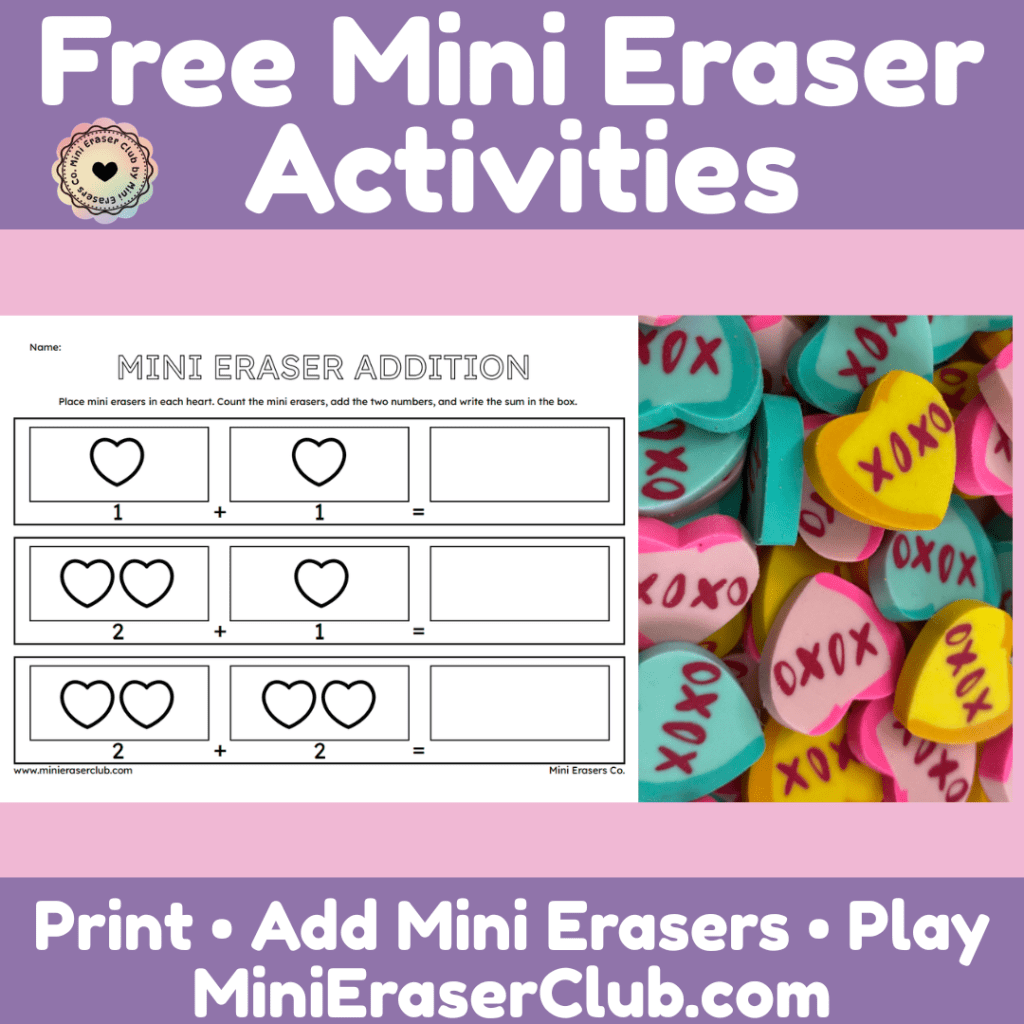
5. Build Addition Problems
Skills/Subject: Addition, number sense
Grade Level: Kindergarten–1st Grade
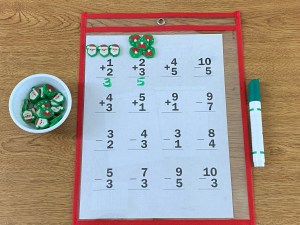
Use mini erasers as math counters to solve simple addition equations. For example, students can physically combine groups of erasers to see how addition works.
6. Subtraction Take Away Activity
Skills/Subject: Subtraction
Grade Level: 1st–2nd Grade
Start with a group of mini erasers and remove some to solve subtraction problems. This hands-on method helps students visualize subtraction concepts.
7. Sight Word Cover-Up
Skills/Subject: Reading fluency
Grade Level: Kindergarten–2nd Grade
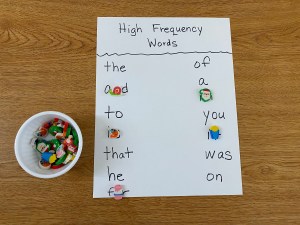
Write sight words on a worksheet or table. Say a word aloud and have students cover the matching word with a mini eraser.
8. Story Starter Activity
Skills/Subject: Creative writing
Grade Level: 1st–4th Grade
Students pick several themed mini erasers and create a short story using all of them. This encourages imagination and vocabulary development.
9. Graph Favorite Erasers
Skills/Subject: Graphing, data analysis
Grade Level: 1st–3rd Grade
Ask students to choose their favorite mini eraser design. Record the results on a simple bar graph and discuss which category has the most or least votes.
10. Measure with Erasers
Skills/Subject: Measurement
Grade Level: Kindergarten–2nd Grade
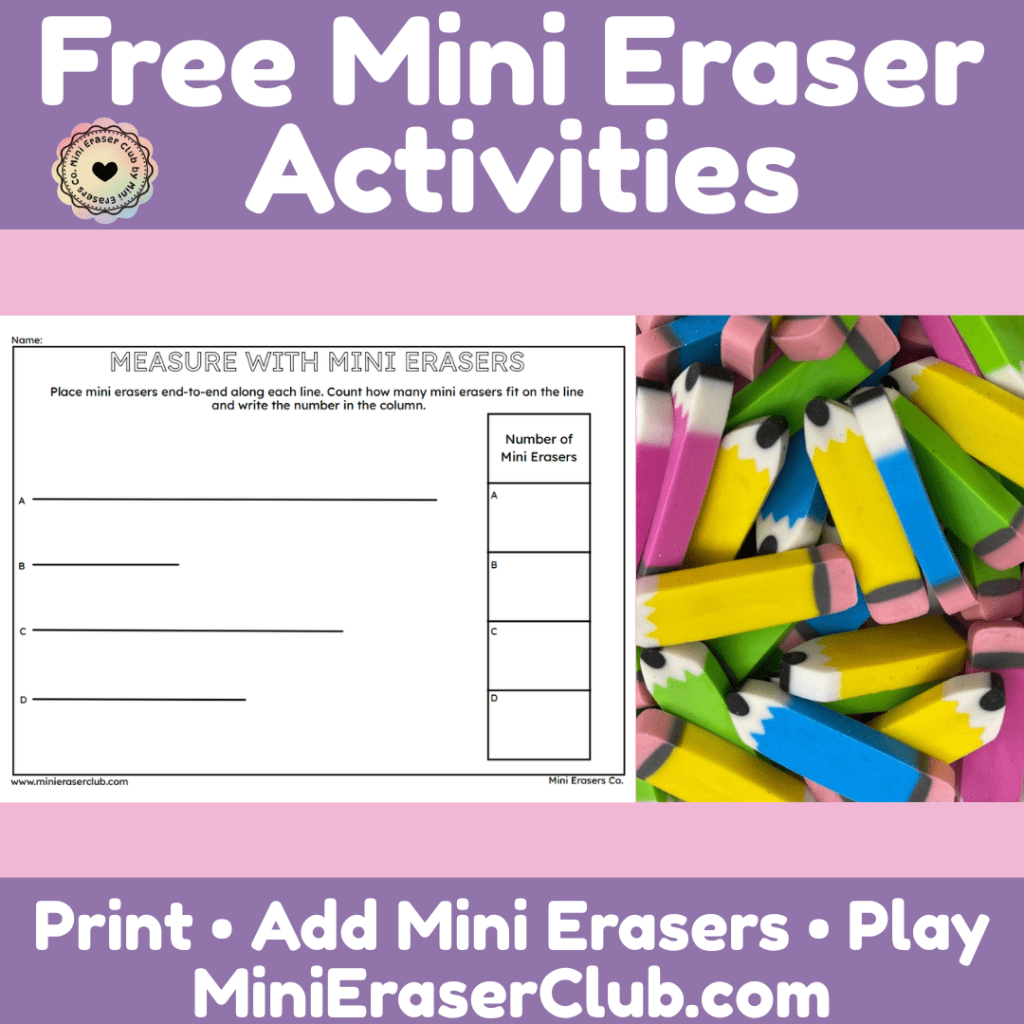
Use mini erasers as nonstandard measurement tools. Students measure classroom objects by counting how many erasers long each item is.
11. Symmetry Art
Skills/Subject: Geometry
Grade Level: 1st–3rd Grade
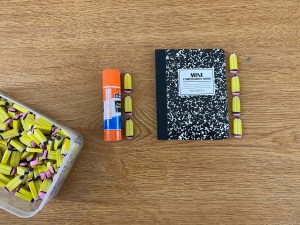
Children arrange mini erasers to create symmetrical designs on both sides of a line.
12. Tweezer Transfer Challenge
Skills/Subject: Fine motor skills
Grade Level: Preschool
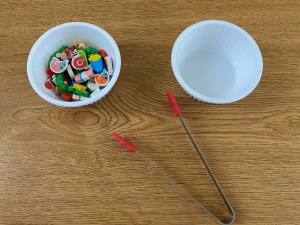
Children use tweezers to move mini erasers from one container to another. This strengthens hand muscles needed for writing.
13. Beginning Sound Sort
Skills/Subject: Phonics
Grade Level: Kindergarten–1st Grade
Label sections with beginning sounds like B, C, and T. Students sort mini erasers according to their starting sound.
14. Fill a Ten Frame
Skills/Subject: Number sense
Grade Level: Preschool–1st Grade
Provide ten-frame mats and ask students to represent numbers using mini erasers. This helps children understand quantities visually.
15. Sensory Bin Search
Skills/Subject: Sensory play, vocabulary
Grade Level: Preschool–Kindergarten
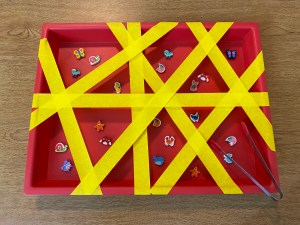
Hide mini erasers inside a sensory bin covered with tape or filled with rice, beans, or kinetic sand. Children search for erasers and identify colors, shapes, or themes.
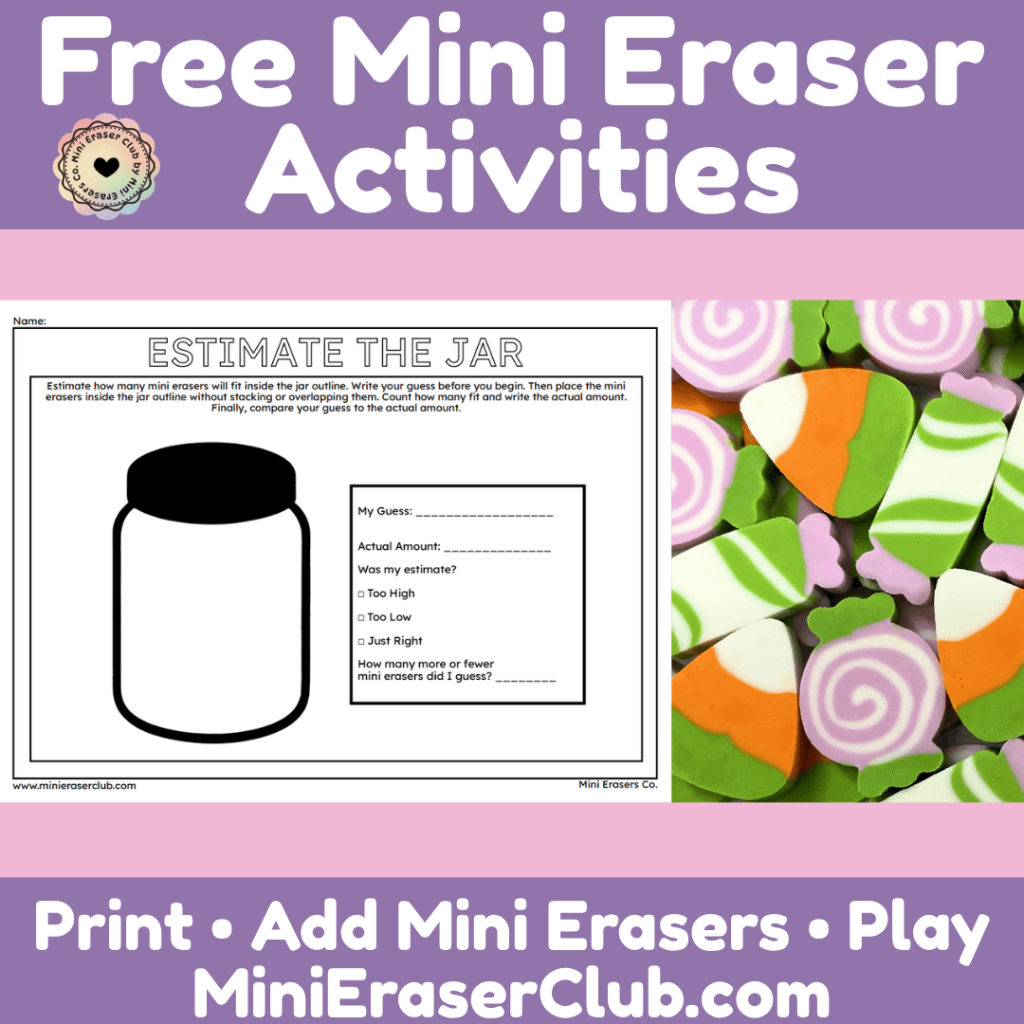
16. Estimation Jar
Skills/Subject: Estimation skills
Grade Level: Kindergarten–3rd Grade
Fill a jar with mini erasers and have students guess how many are inside. Count together afterward to compare estimates.
17. Multiplication Groups
Skills/Subject: Multiplication concepts
Grade Level: 2nd–3rd Grade
Use mini erasers to create equal groups and introduce multiplication visually. Example: 3 groups of 4 erasers.
18. Skip Counting Practice
Skills/Subject: Number patterns
Grade Level: 1st–3rd Grade
Arrange mini erasers in groups for skip counting by 2s, 5s, or 10s. Students count aloud as they move through each group.
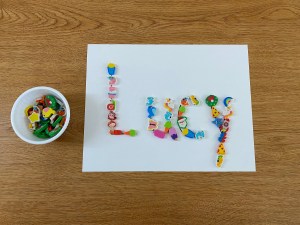
19. Spell Your Name
Skills/Subject: Name recognition, spelling
Grade Level: Preschool–Kindergarten
Children spell their names by placing mini erasers on printed letters. This works well for morning work or literacy centers.
20. Build a Bridge STEM Challenge
Skills/Subject: STEM, engineering
Grade Level: 2nd–5th Grade
Challenge students to build a bridge using classroom materials that can hold several mini erasers without collapsing.
21. Sink or Float Experiment
Skills/Subject: Science exploration
Grade Level: Kindergarten–3rd Grade
Test different mini erasers in water to see which sink or float. Discuss why certain materials behave differently.
22. Seasonal Scavenger Hunt
Skills/Subject: Observation skills
Grade Level: Preschool–2nd Grade
Hide themed mini erasers around the room and let students search for them. Add recording sheets for extra learning practice.
23. Build Arrays
Skills/Subject: Multiplication
Grade Level: 2nd–3rd Grade
Students arrange mini erasers into rows and columns to model multiplication arrays.
24. Roll, Add, and Cover
Skills/Subject: Addition fluency
Grade Level: Kindergarten–2nd Grade
Students roll dice, add the numbers, and cover the correct answer on a game board with a mini eraser.
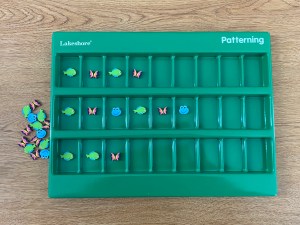
25. Create Simple Patterns
Skills/Subject: Pattern recognition, early math
Grade Level: Preschool–1st Grade
Model a pattern such as red-blue-red-blue and ask children to continue it using mini erasers. Increase difficulty with more complex patterns like ABC or ABB patterns.
26. Probability Pick Game
Skills/Subject: Probability
Grade Level: 2nd–4th Grade
Place different mini erasers in a bag and ask students to predict which type they are most likely to pull out.
27. Compare Numbers
Skills/Subject: Greater than and less than
Grade Level: Kindergarten–1st Grade
Students create two groups of mini erasers and compare which group has more or fewer items.
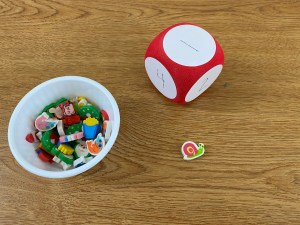
28. Roll and Count
Skills/Subject: Counting practice
Grade Level: Preschool–Kindergarten
Students roll a die and count out the matching number of mini erasers. This is a quick and effective math center activity.
29. Copy the Pattern Card
Skills/Subject: Visual memory
Grade Level: Preschool–Kindergarten
Show students a pattern card and ask them to recreate it using mini erasers.
30. Story Sequencing
Skills/Subject: Reading comprehension
Grade Level: Kindergarten–2nd Grade
Students use themed mini erasers to retell stories in the correct order.
31. Count by Tens Collections
Skills/Subject: Place value
Grade Level: 1st–2nd Grade
Group mini erasers into sets of ten to help students understand tens and ones.
32. Rhyming Match Game
Skills/Subject: Phonemic awareness
Grade Level: Preschool–1st Grade
Students match pictures or words that rhyme and cover them with mini erasers.
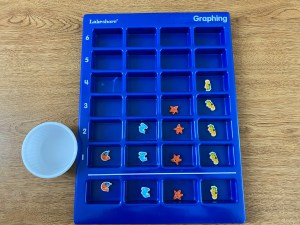
33. Make a Bar Graph
Skills/Subject: Data and graphing
Grade Level: 1st–3rd Grade
Students sort mini erasers by type and create a simple classroom bar graph.
34. Dice Multiplication Game
Skills/Subject: Multiplication facts
Grade Level: 2nd–4th Grade
Roll two dice and create multiplication equations using mini erasers as counters.
35. Shape Building Activity
Skills/Subject: Geometry
Grade Level: Preschool–2nd Grade
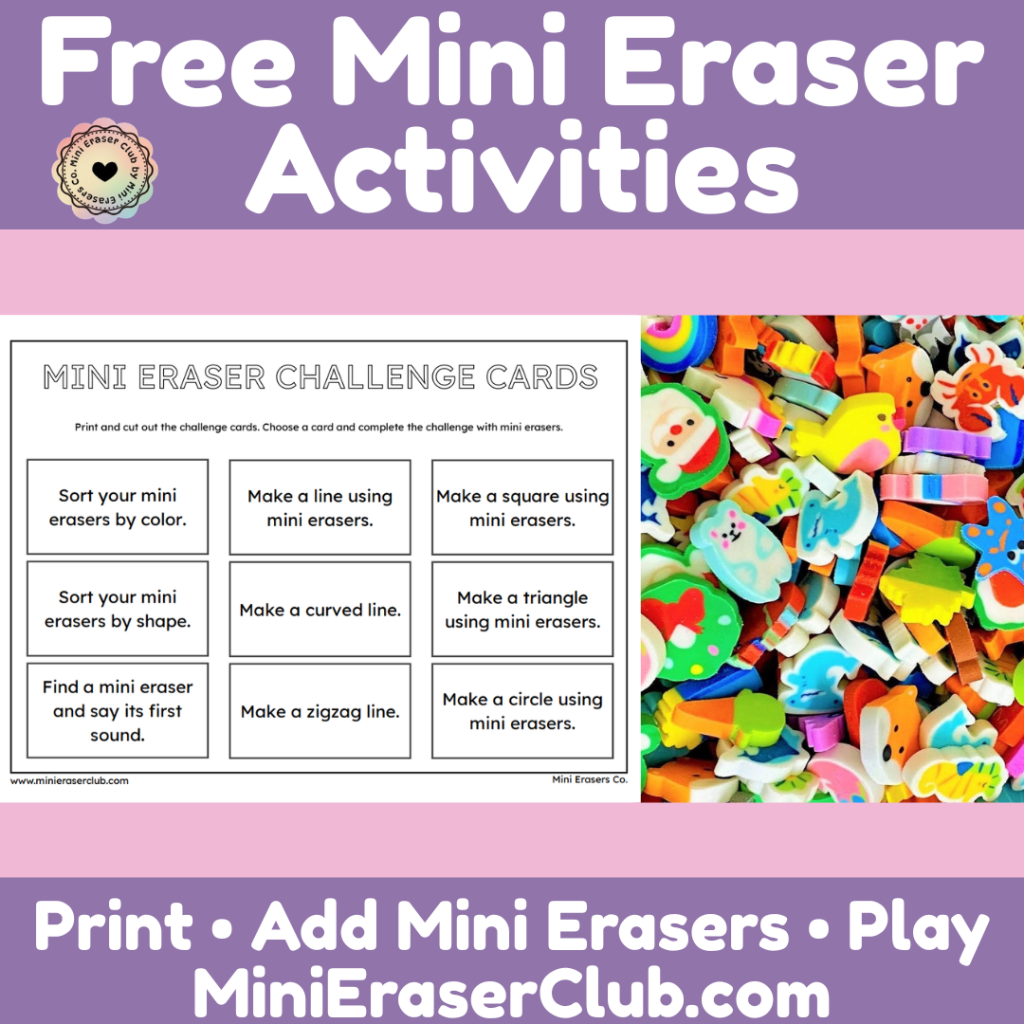
Students use mini erasers to outline or build shapes like squares, triangles, and rectangles.
36. Mystery Bag Descriptions
Skills/Subject: Vocabulary and speaking
Grade Level: Preschool–2nd Grade
Place mini erasers in a mystery bag. Students describe what they feel without looking.
37. Fraction Sorting
Skills/Subject: Fractions
Grade Level: 2nd–4th Grade
Use mini erasers to demonstrate halves, thirds, and fourths in small groups.
38. Coding Path Game
Skills/Subject: STEM and problem-solving
Grade Level: 1st–4th Grade
Students create directions to move mini erasers across a grid like a simple coding activity.
39. Sort by Color
Skills/Subject: Sorting, visual discrimination
Grade Level: Preschool
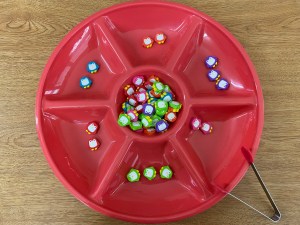
Provide a mixed pile of mini erasers and ask students to sort them into groups by color. You can use muffin tins, cups, sorting trays, or sorting mats to make organization easier.
40. Memory Pattern Challenge
Skills/Subject: Memory skills
Grade Level: Preschool–1st Grade
Show a mini eraser pattern briefly, hide it, and ask students to recreate it from memory.
41. Animal Habitat Sorting Activity
Skills/Subject: Science
Grade Level: Preschool–1st Grade
Sort mini erasers into habitat categories such as land, water, air, or forest animals.
42. Tally Mark Counting
Skills/Subject: Counting and data collection
Grade Level: 1st–2nd Grade
Students count mini erasers and record totals using tally marks.
43. Word Family Sort
Skills/Subject: Phonics
Grade Level: Kindergarten–2nd Grade
Students group words by word families like -at, -an, or -op using mini erasers as markers.
44. Create Pictographs
Skills/Subject: Data representation
Grade Level: 1st–3rd Grade
Use mini erasers as picture symbols to build simple pictographs.
45. Addition Race
Skills/Subject: Math fluency
Grade Level: 1st–2nd Grade
Students race to solve addition problems and collect mini erasers for correct answers.
46. Balance Scale Investigation
Skills/Subject: Measurement and science
Grade Level: 1st–3rd Grade
Compare the weight of mini erasers using a balance scale and make predictions.
47. Copy a Design
Skills/Subject: Spatial awareness
Grade Level: Preschool–1st Grade
Students look at a design and recreate it exactly using mini erasers.
48. Hidden Eraser Memory Game
Skills/Subject: Focus and memory
Grade Level: Preschool–Kindergarten
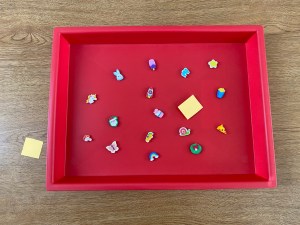
Place several mini erasers on a tray, cover one, and ask students to identify which eraser is missing.
49. Build a Habitat Scene
Skills/Subject: Science and creativity
Grade Level: Kindergarten–3rd Grade
Students use animal mini erasers to create habitats like oceans, forests, or deserts.
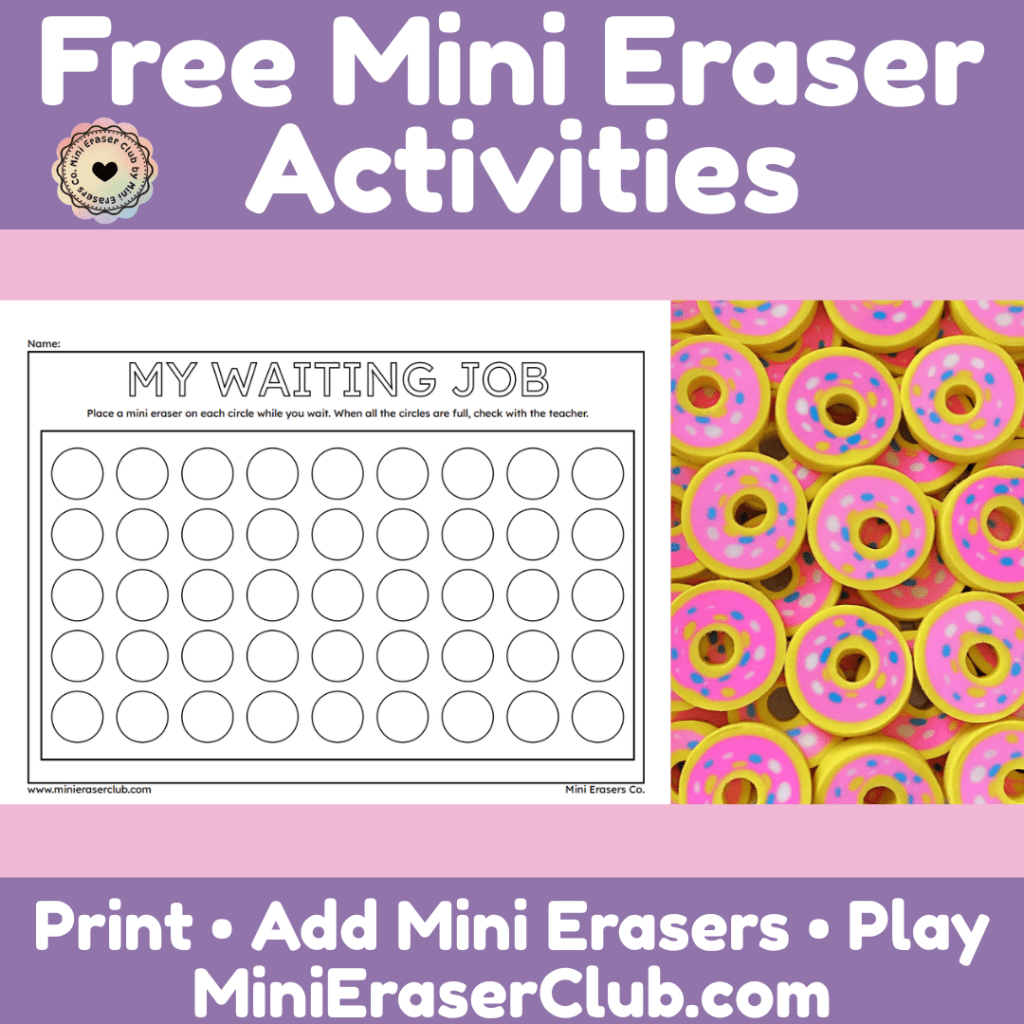
50. Reward Jar Counting Challenge
Skills/Subject: Counting and estimation
Grade Level: Preschool–2nd Grade
Fill a reward jar with mini erasers and let students count or estimate totals throughout the week.
Frequently Asked Questions About Mini Eraser Learning Activities
What age group are mini eraser activities best for?
Most mini eraser activities work best for preschool, kindergarten, and elementary students. Many activities can easily be adapted for toddlers with supervision or for older students needing hands-on learning support.
Are mini erasers good for fine motor skills?
Yes! Mini erasers are excellent for strengthening fine motor skills. Activities like sorting, pinching with tweezers, transferring, stacking, and pattern building help children improve hand strength and coordination needed for writing.
Where can I buy mini erasers for classroom activities?
You can find themed mini erasers for holidays, seasons, math centers, literacy games, and sensory play at Mini Erasers Co..
Mini Erasers Co. offers fun classroom-themed mini erasers that work perfectly for teachers, homeschool families, tutors, and educational activity setups.
What are the best mini eraser themes for learning?
Popular mini eraser themes include:
- Animals
- Dinosaurs
- Alphabet letters
- Numbers
- Food items
- Seasonal holidays
- Ocean creatures
- Transportation
- Weather themes
- Space themes
Using themed mini erasers can help connect activities to science units, seasonal lessons, and classroom themes.
Can mini erasers be used for homeschool activities?
Absolutely! Mini erasers are perfect for homeschool learning because they are low-prep, affordable, and easy to use across multiple subjects. Parents often use them for counting games, phonics practice, sensory bins, and reward systems.
How can mini erasers be organized?
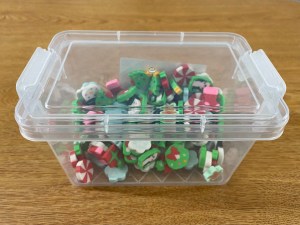
Mini erasers can be organized in a variety of simple and practical ways to keep them easy to use and store. Many people sort them by theme, color, season, shape, or activity type using labeled bins, zipper bags, craft organizers, divided containers, muffin tins, sorting trays, or small plastic containers. Keeping mini erasers organized makes setup faster, helps children independently access materials, and allows the manipulatives to be reused for multiple learning activities.
Final Thoughts
Hands-on learning activities help children stay engaged, focused, and excited about learning. Whether you are teaching math, literacy, science, or fine motor skills, mini erasers provide an easy and affordable way to create interactive educational experiences.
With themed manipulatives from Mini Erasers Co., you can quickly set up fun classroom centers, homeschool activities, and seasonal learning games that children will love.
Ready to add more creativity and hands-on learning to your lessons? Explore the full Mini Erasers Co. Learning Collection and discover new ways to make learning playful every day.


Leave a comment